 BabyDrift Games
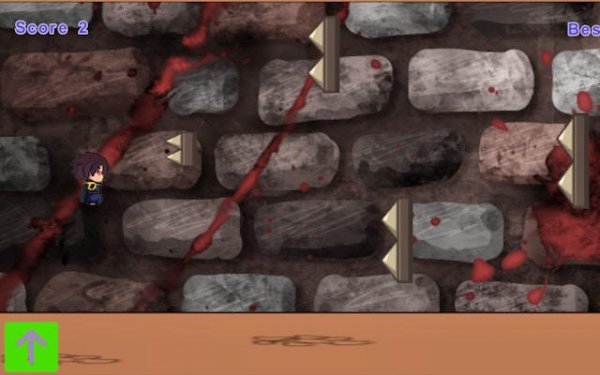
Yvelocity Reflex Challenge keeps its scope tight: one avatar, vertical movement, and obstacles that get faster and less predictable. The automatic high-score saving and cross-device controls make it easy to pick up for short sessions. Its main limitation is that it offers no story or exploration, so players seeking depth may find it repetitive. For anyone who enjoys reaction-based score chasing, the shifting obstacle behavior adds a genuine layer of difficulty.
Yvelocity Reflex Challenge asks one thing of you: keep a vertical avatar out of the way of incoming obstacles for as long as possible. Movement is limited to up and down, so every dodge is a decision about position and timing rather than complex navigation. The game starts at a manageable pace, but speed rises as your score increases, turning early calm into sustained pressure. Because the avatar only moves vertically, mistakes are usually the result of reacting late or overcorrecting, not of complicated controls.
On mobile, on-screen arrow buttons move the avatar. On desktop, the keyboard arrow keys do the same job. Both schemes are simple enough to learn without a tutorial, which keeps the focus on reaction time instead of input mastery. The game saves your high score automatically, so progress is tracked between sessions without any manual bookkeeping. That design supports short play bursts: you can open the game, attempt a run, and see whether you beat your previous best.
What separates Yvelocity Reflex Challenge from a straightforward dodging game is the later introduction of obstacles that shift to vertical movement. Once those appear, reading the screen ahead becomes as important as raw speed, because an obstacle that changes direction can punish a dodge that would have worked earlier. The combination of rising speed and changing obstacle behavior means each session plays out differently, and the challenge grows in two ways at once: faster timing and less predictable movement.
This is a casual, skill-based arcade game built for quick sessions rather than long campaigns. Players who enjoy refining reaction time, chasing personal records, and playing in short breaks will get the most from it. The simple vertical controls make it accessible to a wide range of ages, while the progressive difficulty and shifting obstacles give experienced players something to master. It is not a story-driven or exploration-focused game; its appeal is repetition, precision, and the steady pursuit of a higher score.
Sign in to comment
You must be logged in before posting a review or rating.
No comments yet. Be the first to comment!






Editorial Notes