 BabyDrift Games
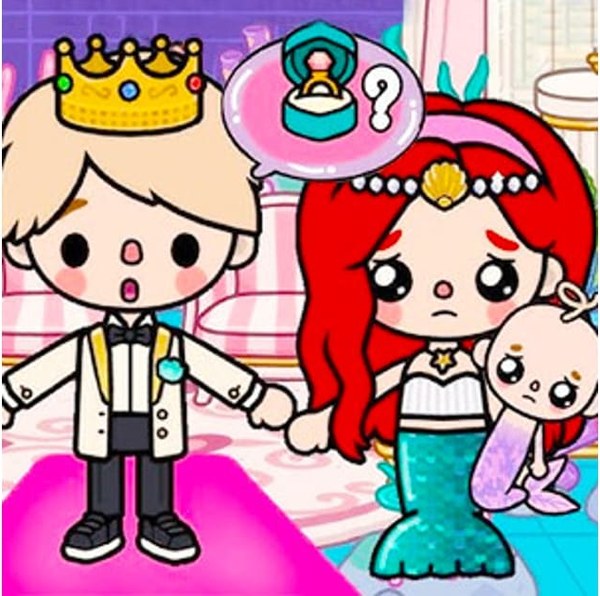
Mermaid Wedding Celebration Story offers a pressure-free creative outlet across three areas: dining, dressing, and ceremony. The lack of scores or time limits makes it accessible to younger players and anyone seeking a relaxed design experience. The main limitation is the absence of save features or structured goals, which may reduce long-term engagement for players who prefer progression. It best suits those who enjoy free-form storytelling and repeat customization.
Mermaid Wedding Celebration Story gives players three distinct areas to manage: a dining hall, a dressing room, and a ceremony stage. Each space serves a different part of the wedding preparation. The dining hall focuses on food arrangement and table settings. The dressing room handles appearance changes for the bride, groom, and guests. The ceremony stage is where decorations come together and photos can be taken. Players can move between areas freely, with no required order or time pressure.
In the dressing room, players select outfits, hairstyles, and makeup for multiple characters. Both human and mermaid characters can receive new looks. Clicking on a character or item opens options to adjust facial expressions, swap accessories, or change clothing. The game includes a range of dresses, hairstyles, and makeup choices. Because there are no wrong combinations, players can experiment until the wedding party matches their vision.
The dining area lets players place food items, set tables, and choose background music. These choices shape the mood of the reception. Music selection is straightforward: players pick from available tracks to match the scene they are building. Food and table arrangements can be rearranged at any time, so the dining hall can shift from a formal setup to a casual gathering with a few clicks.
On the ceremony stage, decorations can be dragged to new positions or swapped for alternatives. The stage also includes an in-game photography feature, allowing players to capture moments after arranging the scene. This combination of decoration and photography encourages players to treat the stage as a storytelling tool rather than a fixed set. Every object responds to clicks, so the stage can be rebuilt repeatedly without penalty.
There are no scores, timers, or fail states. The interface is designed for easy navigation across age groups, and the game appeals to players who enjoy dress-up, makeup, cooking, and wedding themes. Progress is measured only by how much the player chooses to customize. The variety of characters, outfits, and decorations supports repeated sessions, each producing a different wedding story.
Sign in to comment
You must be logged in before posting a review or rating.
No comments yet. Be the first to comment!








Editorial Notes