 BabyDrift Games
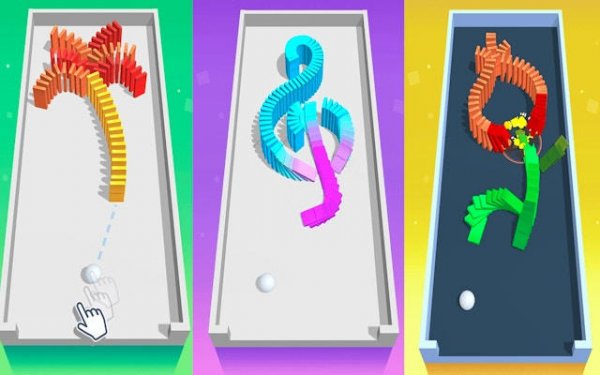
Falling Tile Chain Reaction trades speed and scoring for observation and gentle experimentation. Its strength is the clarity of its core loop: study a tile arrangement, choose direction and force, then watch the cascade resolve into a hidden design. The absence of timers and competitive pressure makes it approachable for families and casual players, though those seeking fast feedback or ranked challenges may find the pace too slow.
Each level in Falling Tile Chain Reaction begins with a standing arrangement of tiles. The player's only direct action is to target the first piece, choosing both the direction and the strength of the push. That single decision sets off a flowing chain of falls. The aim is not to knock everything down as fast as possible, but to guide the cascade so it reveals a hidden design or pattern. The game strips away timers and complex menus, leaving the satisfaction of a well-aimed trigger.
Levels vary in shape and structure. Some arrangements form curves, others stack into towers, and some spread broadly across the screen. These differences matter because the chain's path depends on how each tile leans and collides with its neighbors. Players can study the arrangement for as long as they like before committing to a move. That open-ended observation period is central to the experience, and the hidden pattern at the end acts as a small reward for completing the sequence.
Interaction stays simple: a finger or mouse adjusts the direction and strength applied to the starting tile. A gentle tap produces a different chain than a firmer push, so the same layout can resolve in more than one way. The controls are responsive and easy to learn, which keeps the game accessible. There are no complicated menus or timers to manage, and no pressure to act quickly.
The overall mood is calm and focused. Soft visual feedback accompanies each falling tile, giving the sequence a rhythmic feel. Players can pause between levels or take breaks without losing progress, making the game suitable for short relaxation sessions or longer stretches. Over time, judging angles and force becomes more accurate, and predicting how a chain will travel through a complex layout gets easier. The game rewards patience and careful planning, while failure simply means trying again with a better approach. There is no violent content or competitive pressure, and the clean visuals suit players of all ages.
Sign in to comment
You must be logged in before posting a review or rating.
No comments yet. Be the first to comment!








Editorial Notes