 BabyDrift Games
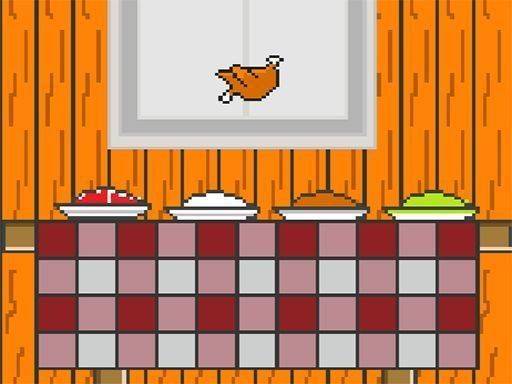
Skyward Chicken Dash succeeds as a pick-up-and-play arcade game because it asks for one thing: well-timed taps. The bright cartoon presentation and soft color palette keep the mood light, and the absence of menus or power-ups means anyone can start within seconds. The trade-off is depth. With no final level, no upgrades, and no variation beyond obstacle spacing, the game relies entirely on your desire to beat your own score. Players who enjoy pure rhythm-based challenges will find that focus appealing; those who need new mechanics to stay engaged may drift away quickly.
Skyward Chicken Dash is built on a single interaction: tap or click to make the chicken flap its wings and rise, then release to let it fall. The challenge is not speed but altitude control. You must thread the chicken through narrow openings between barriers, and each successful passage adds to your score. Any contact with a barrier or the ground ends the attempt immediately, and the score resets to zero. There are no checkpoints, no extra lives, and no way to recover a run once you clip an obstacle. That finality is what gives each tap weight.
The game uses a bright, cheerful visual style with simple but appealing graphics. The chicken is drawn in a friendly, cartoon-like manner, and the backgrounds rely on soft colors rather than harsh contrast. This presentation keeps the mood relaxed even when the gap timing gets tight. It also makes the game approachable for younger players or anyone looking for a low-stress activity rather than a high-intensity challenge.
There is no final level or endpoint. Progress is measured only by the score, which resets after every collision. That structure encourages repeated play as you try to beat your personal best. Because the game avoids complex mechanics or power-ups, improvement comes from refining your timing and learning the rhythm of the obstacle spacing. [IMG_1]
The control scheme is intentionally minimal: a single tap or click to flap. There are no menus or settings to adjust before starting, so you can begin playing right away. That simplicity also means the game works well on both desktop and mobile devices, since the only required input is available on either platform. [IMG_2]
Consistency matters more than rapid tapping. Establishing a steady flapping rhythm that matches the spacing of the barriers is more effective than frantic input. Watching for the next gap early helps you plan the altitude you need. Staying calm and avoiding rushed taps reduces accidental collisions. After a failed attempt, reviewing the moment of impact can reveal whether you were too high, too low, or simply off the rhythm.
Sign in to comment
You must be logged in before posting a review or rating.
No comments yet. Be the first to comment!





Editorial Notes