 BabyDrift Games
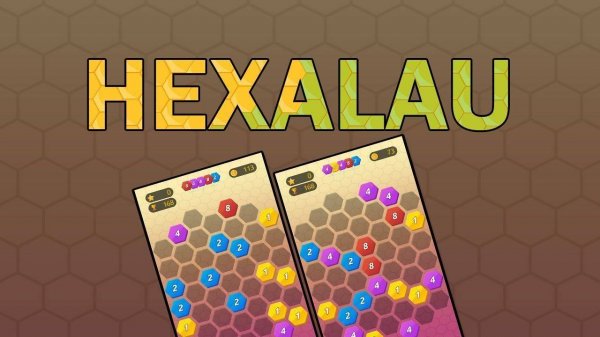
HexaNumber Clear Puzzle strips the genre down to one clean decision: which group of four or more matching numbers to remove before the board refills. The hexagonal grid gives each tile more neighbours than a square grid, so grouping options are wider and board management matters more. Removing timers makes it accessible for short breaks, though players who need external pressure may find the pace too gentle. Its appeal lies in score chasing and pattern recognition rather than level progression.
HexaNumber Clear Puzzle places numbered tiles on a hexagonal grid. Your task is to find and select groups of four or more adjacent tiles that share the same number. A valid selection removes those tiles and awards points. Because the grid is hexagonal, each tile touches up to six neighbours, which opens more grouping possibilities than a square grid. After every removal, new tiles drop into the empty spaces. The board refills gradually, and the session ends when no more tiles can be placed. That refill rule is what turns a simple matching task into a planning exercise: clearing a group frees space now, but the replacement tiles can create new clusters or block future moves.
Many puzzle games push you to act fast. HexaNumber Clear Puzzle does not. There is no countdown, no time limit, and no penalty for pausing to study the board. You can trace several possible groupings, compare which one leaves the healthiest layout, and commit when you are ready. This makes the game comfortable for short breaks as well as longer sessions. The real pressure comes from the board itself: every move changes the tile arrangement, and poor choices shrink your options. Success depends on balancing an immediate high-scoring clear against the need to keep enough open space for the next wave of tiles.
Interaction is limited to tapping or clicking tiles to select them. The game responds immediately, with no complex menus or hidden commands. Each hexagonal tile carries a distinct colour and a clear number, so you can scan the board and identify matching groups at a glance. The interface stays minimal, without distracting animations or clutter. That combination of straightforward input and readable tiles keeps the focus on the puzzle itself, and it means players of any age or experience level can start without a tutorial.
The scoring system tracks your performance across sessions, giving you a personal target to beat. Because new tiles are placed randomly after each move, no two games unfold the same way. That randomness provides replay value and forces you to adapt rather than memorise a fixed solution. Over time, regular players tend to sharpen their pattern recognition and forward planning, which leads to longer games and higher scores. Progress here is measured in personal bests and better decisions, not in unlockable levels or story content.
Sign in to comment
You must be logged in before posting a review or rating.
No comments yet. Be the first to comment!









Editorial Notes