 BabyDrift Games
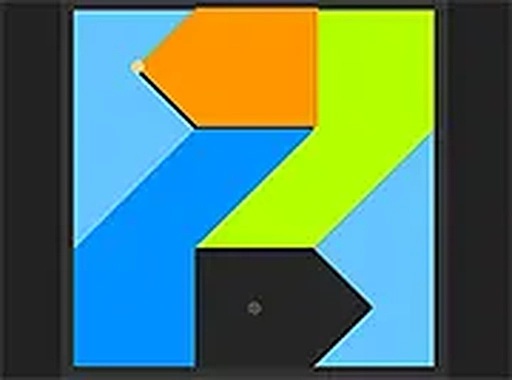
Geometric Fit Puzzle Challenge delivers the classic tangram experience without unnecessary additions. The seven-tile system is easy to understand but hard to master, and the shape library moves from simple outlines to genuinely tricky figures. Controls are immediate on both desktop and mobile, with clear feedback when a piece fits. The main limitation is that the input does not describe additional modes, timers, or scoring, so the appeal rests entirely on the puzzle-solving itself. Players who enjoy logic and spatial reasoning will find a solid, no-frills challenge.
Geometric Fit Puzzle Challenge uses a set of seven geometric tiles, traditionally called tans. The goal is to arrange all seven pieces so they exactly fill a given outline, forming a recognizable shape such as an animal, object, or abstract figure. The rules are simple: no gaps, no overlaps, and every piece must be used. That simplicity is what makes the puzzle demanding, because the solution often depends on a single correct orientation that is not immediately obvious.
Interaction is handled with a mouse or touch input. You select a tile, move it into position, and can rotate or flip it to explore different orientations. The interface gives clear visual feedback when a piece is correctly placed, which helps you confirm progress without guesswork. This control scheme works the same way on desktop, tablet, and smartphone, so the puzzle remains accessible whether you are using a cursor or a finger.
The game includes a collection of target shapes that range from simple silhouettes to complex figures. Early puzzles use basic outlines that teach how the seven pieces fit together. Later challenges present more intricate shapes that require careful planning and multiple attempts. This progression keeps the game engaging for casual players and for those seeking a stronger mental workout. Because each shape is a fixed outline, solving it is a matter of spatial reasoning rather than luck.
Experienced solvers often begin by placing the largest tiles first, using them to define the overall shape. Rotating and flipping tiles frequently can reveal unexpected fits. When progress stalls, stepping back and trying a completely different arrangement often leads to a breakthrough. Regular practice improves pattern recognition and spatial reasoning, which in turn makes future puzzles faster to solve.
Sign in to comment
You must be logged in before posting a review or rating.
No comments yet. Be the first to comment!







Editorial Notes