 BabyDrift Games
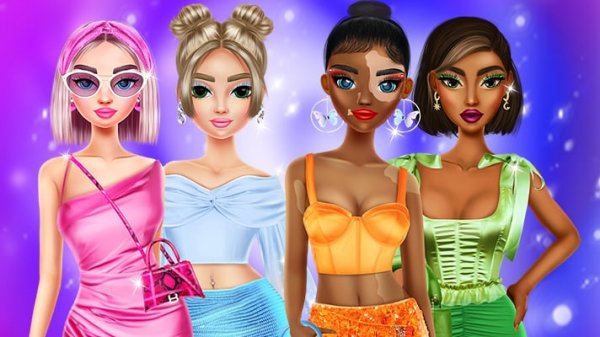
Monochrome Looks Fashion Styling delivers exactly what its name suggests: a browser-based dress-up tool built around a single-color constraint. The four characters—Kiki, Polka, Ashley, and Claudia—give you different personalities to style, though the wardrobe categories remain consistent across all of them. The lack of timers, scores, and inappropriate content makes it accessible to a wide age range. Its main limitation is the absence of a stated save feature, so completed outfits exist only in the moment. Players who enjoy open-ended fashion experimentation will find the monochrome restriction more interesting than restrictive.
Monochrome Looks Fashion Styling centers on four characters: Kiki, Polka, Ashley, and Claudia. Each has a unique personality that informs how you might dress them, though the game does not enforce any character-specific rules. You choose a character, then browse categories including tops, bottoms, dresses, accessories, and makeup. Clicking an item applies it immediately, so you can see the effect without navigating menus or confirming changes. The only objective is to build a look that feels right to you.
The monochrome theme is the game's defining constraint. Instead of mixing arbitrary colors, you work within a single hue or a narrow tonal range, using lighter and darker shades to create contrast. This limitation makes small decisions matter: a pale gray top against charcoal trousers reads differently than the same top against black. Accessories and makeup become tools for breaking or reinforcing the palette. Because there are no timers or scores, you can revise an outfit as many times as you like without penalty.
The interface is click-based and runs in a web browser on both desktop and mobile. There is no installation, no account requirement mentioned, and no skill barrier. Players browse categories, click items to apply them, and mix freely. The absence of timers, scores, or failure states means the game is suitable for short sessions or extended experimentation. It is designed for players who want a relaxed creative outlet rather than a challenge to overcome.
Removing pressure changes how you approach the wardrobe. With no objective to complete, you can test combinations that might look wrong and adjust without consequence. The game explicitly supports both bold monochrome statements and subtle tonal variations, so the same toolset accommodates different styling instincts. This makes it approachable for younger players and anyone who prefers open-ended dress-up over goal-driven fashion games.
Sign in to comment
You must be logged in before posting a review or rating.
No comments yet. Be the first to comment!


Editorial Notes