 BabyDrift Games
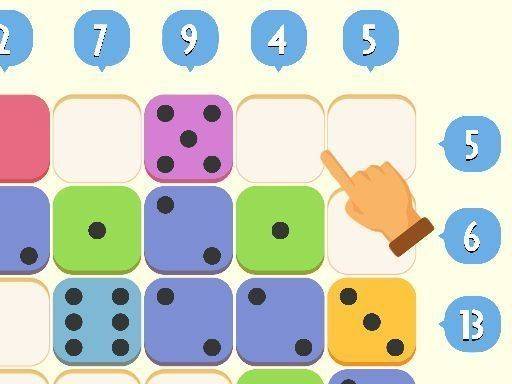
Number Sum Grid Puzzle succeeds by keeping its rules minimal: place tiles, total rows or columns to 10, clear them, repeat. The lack of timers makes it approachable for children and relaxing for adults. Random tile order adds replay value, though the core loop may feel repetitive for players seeking more varied mechanics. It is best suited to casual players who enjoy arithmetic and open-ended score improvement.
Number Sum Grid Puzzle asks you to place numbered tiles onto a grid. Your goal is to make any complete row or column add up to exactly 10. When a row or column hits that total, the tiles disappear and you earn points. The board stays active as long as you can keep placing tiles, so every placement affects how long your session lasts.
The game rewards forward thinking. Because cleared tiles free up space, you can set up multiple rows or columns to clear with a single tile. Random tile order means you cannot rely on a fixed sequence. Instead, you adapt your strategy each session, balancing immediate clears against keeping the board open for future placements.
There are no timers or pressure mechanics. You can study the board and calculate sums at your own speed. The drag-and-drop controls are simple enough for children, while the spatial and arithmetic planning gives adults a gentle mental workout. Clean, colorful graphics keep the focus on numbers and grid layout rather than distracting effects.
Each game ends when no more tiles can be placed. That creates a natural score-chasing loop: better planning leads to longer sessions and higher scores. Random tile generation keeps each attempt different, so the puzzle does not become a memorization exercise. Short breaks or longer play sessions both fit the untimed format.
Sign in to comment
You must be logged in before posting a review or rating.
No comments yet. Be the first to comment!





Editorial Notes